
Buyer's guide · 2026-06-16 · 4 min read
Choosing furniture visualization software for a MENA retail business
What furniture retailers and interior studios across the Middle East and North Africa should look for in 3D and AR visualization software.
Why MENA furniture retail needs visualization now
Furniture buying in the Middle East and North Africa is shifting fast. Customers research online, compare quickly, and arrive at the showroom expecting staff to show them exactly how a product will look at home. Static catalog photos and a tape measure no longer answer that expectation.
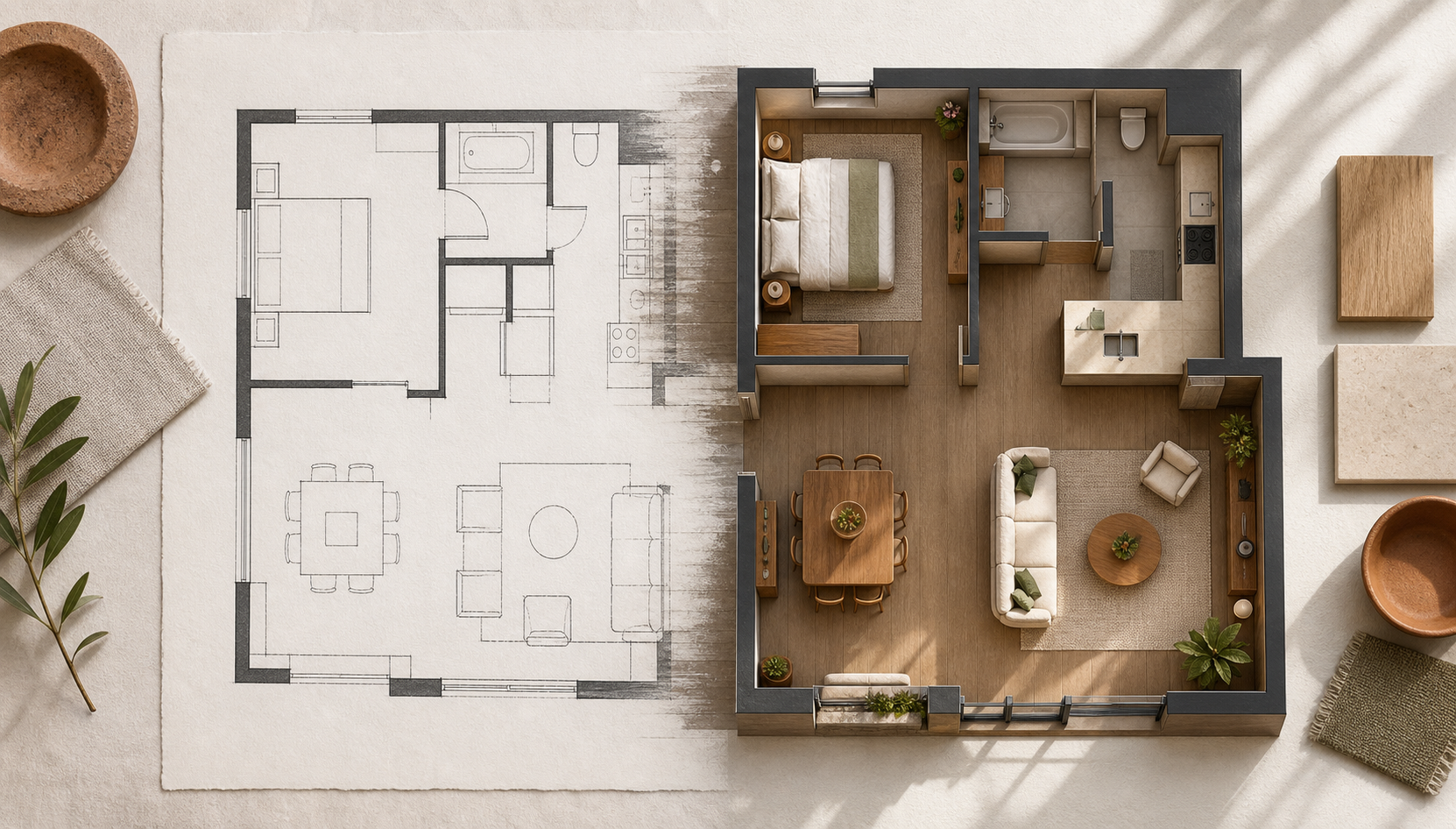
Furniture visualization software closes that gap. By turning a floor plan into an explorable 3D apartment, a MENA retailer can show complete rooms in context, in Arabic and English, before a single item is delivered. That is the difference between a customer imagining a sofa and a customer seeing their sofa in their living room.
This shift is not limited to large cities. Showrooms in secondary markets across Egypt, Saudi Arabia, and the Gulf are adopting the same tools, because the underlying buyer behavior — research first, decide fast, expect visual proof — is regional, not local to any one city.
What should you look for in furniture visualization software?
Start with the catalog. The most important question is whether the software is catalog-aware: can it furnish a room with your real products, sizes, variants, and finishes, rather than generic stand-ins? Visualization that is disconnected from your catalog produces nice pictures but no quote.
Then look at the full journey. Strong furniture visualization software covers reconstruction from a plan, automatic furnishing, live product and finish swaps, a web 3D viewer, and a mobile AR view, all under your brand. Each handoff you remove between tools is friction you remove from the sale.
Finally, weigh integration and output. The tool should export a clear list of selected products and changes so the visual decision becomes a request and a quote your team can act on. If the software cannot produce that list automatically, someone on your team will end up doing it by hand, which slows every deal down.
Consider onboarding too. A tool that takes months to load a full catalog delays the entire rollout. Ask any vendor how long it takes to bring a first collection online, and what happens when your catalog changes — new SKUs, discontinued finishes, seasonal collections — because a catalog that goes stale inside the visualization tool quickly becomes a liability instead of an asset.
Arabic-first is not a translation afterthought
Many platforms treat Arabic as a late translation layer, which shows up as broken right-to-left layouts and awkward copy. For a MENA audience that erodes trust during the most important part of the sale. A customer who sees a mirrored icon or an oddly translated label during a big purchase decision starts to wonder what else might be cutting corners.
Visualization software built for the region handles bilingual selling journeys properly, with correct right-to-left layout and language that reads naturally to local buyers. FurnViz is designed MENA-first for exactly this reason — Arabic is not an add-on, it is a first-class experience alongside English from the first screen a customer sees.
This also matters for finishing companies working across multiple markets in the region. A fit-out proposal shown to a client in Cairo and one shown in Riyadh should feel equally native in either language, without the retailer maintaining two separate visual workflows.
From visualization to a measurable sales workflow
The goal is not a prettier presentation; it is a shorter path from interest to a confident purchase. Good software should help you raise conversion, reduce returns caused by mismatched expectations, and shorten sign-off for studio projects.
Retailers evaluating vendors should ask for numbers, not just demos: what conversion lift have other MENA retailers seen, how much did returns drop, and how much shorter did the sign-off cycle become. A vendor that cannot answer with real regional data is asking you to be their first case study.
To see how this works end to end, explore the FurnViz product features and the solutions built for retailers and interior studios, then book a demo with your own catalog in mind. The clearest way to evaluate any visualization platform is to see your own products, not a stock demo catalog, furnished into a real floor plan.
Evaluate security and data handling too
Security and data handling deserve a mention too, especially for retailers integrating visualization into an existing CRM or inventory system. Ask where customer floor plans and saved scenes are stored, who can access them, and whether the vendor supports the data-handling standards your business already commits to. A visualization tool that improves the sales experience but creates a new compliance gap is not a net win.
Related reading