
AR and showrooms · 2026-06-29 · 4 min read
Using an AR furniture app to upgrade the showroom experience
How augmented reality and a 3D interior design tool help retailers turn showroom visits into confident purchases.
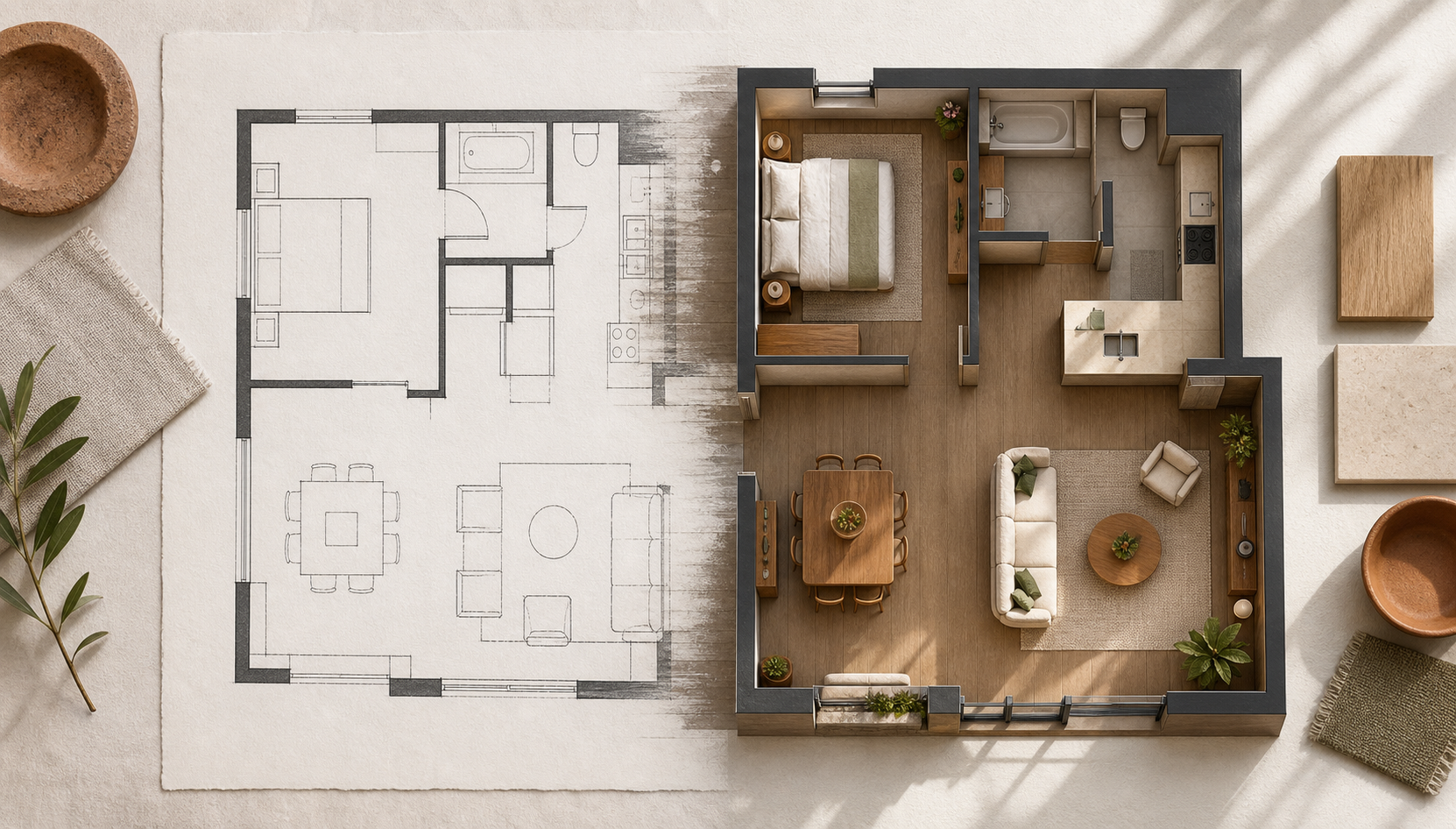
The showroom is still where decisions happen
Even as research moves online, the showroom remains where many furniture decisions are finally made. The problem is that a showroom can only display so many products in so many configurations, and customers still have to imagine the rest in their own homes.
An AR furniture app extends the showroom beyond its floor space. Instead of limiting the conversation to what is physically on display, staff can place any catalog product, in any finish, into a customer's actual room on a phone or tablet.
This matters most for larger items and full collections. A showroom might have room to display three sofa configurations out of thirty in the catalog. An AR furniture app removes that physical limit entirely — every variant becomes available to show, in the customer's own space, without a single extra square meter of floor.
What does an AR furniture app add in the room?
Augmented reality answers the two questions that stall a sale: will it fit, and will it suit the space? Seeing a true-to-scale sofa or wardrobe in the real room removes the guesswork that leads to hesitation and returns.
Because the AR view is tied to the catalog, what the customer sees is exactly what they can buy. Sizes, variants, and finishes match the real product, so the experience builds confidence instead of setting expectations the delivery cannot meet.
This precision also protects the retailer. When an AR view is generic or approximate, a customer who receives a product that looks smaller or different than expected blames the store, not the technology. Catalog-accurate AR keeps the promise made in-store consistent with what arrives at the door.
A 3D interior design tool for retailers, not just designers
A 3D interior design tool is often framed as something only professional designers use. For retailers, the value is simpler: let any salesperson assemble a complete, realistic room from the catalog in minutes, without specialist training.
That combination, a 3D interior design tool for retailers plus an AR furniture app for the final check, lets a showroom team move from a single product to a full furnished room and back to a concrete quote in one conversation.
Training staff to use this combination well takes less time than most retailers expect. The skill is not technical; it is knowing when to reach for the 3D room view to sell a full concept, and when to reach for AR to close a hesitation about one specific piece.
Make the technology disappear
The best AR and 3D experiences are the ones customers barely notice. The technology should fade into a smooth, branded flow that helps people decide, not a gadget that distracts from the product.
This is where many AR pilots fail. A flashy demo that impresses on a trade show floor can feel slow or gimmicky in an actual sales conversation if it interrupts the flow instead of supporting it. The bar for showroom AR is not "impressive" — it is "invisible and fast."
Showrooms that combine both tools well tend to restructure the visit itself: a greeter uses the 3D room tool to understand what the customer is furnishing, a specialist uses AR to resolve any remaining size or fit concerns, and the visit ends with a saved scene and a quote rather than a stack of brochures.
Interior studios get a similar benefit, differently applied
Interior studios can use the same combination differently. Instead of a single product decision, a designer walks a client through an entire proposed room, then uses AR on-site during a follow-up visit to confirm scale against the client's actual furniture and fixtures that are staying in place. The studio closes the design proposal and the furniture order in the same visit instead of two separate meetings weeks apart.
What retailers should measure
Retailers that track the impact of adding AR and 3D to the showroom typically watch three numbers: average time to decision, attach rate on complementary items shown in the same 3D room, and returns tied to size or fit mismatches. All three tend to move in the retailer's favor once staff are comfortable using the tools as part of a normal conversation rather than a special demo reserved for hesitant customers.
To see how FurnViz brings AR and 3D into one workflow, explore the product features and the solutions for retailers and studios, then try it with your own showroom scenario. The fastest way to judge whether this fits your business is to bring in your own bestsellers and see them placed in a real customer's room, not a staged demo unit.
Related reading